Greater Israel - the revenge of geography and the Dahiya doctrine
By: Dr Petrus de Kock – Buiteboer (11-8-26)
In a recent delivery of Blindspot the argument was made that the world is living in a period characterised by the revenge of geography. For about three decades, following on the end of the Cold War, the world was presented as a stage for rabidly rapid globalisation. However, Larry Fink, President of Blackrock argued that the onset of the Russian Special Military Operation in Ukraine, marked the end of globalisation as the world had come to know it from the 1990s.
However, during the 1990s, students of international relations, and any casual observer, were bombarded by catch phrases, all aiming to illustrate what globalisation is, and what it means for the planet. At the time the world was said to be witnessing the end of geography, death of borders, transnational (market) interdependence, digital integration, globalist ‘free market’ or capitalistic dominance.
Those who argued against such assumptions as the above, are not surprised that at this moment in human history, the hard reality of geography, routes, resources, and intensifying conflict for control of those conspire to allow geography, awareness of territory, and in the seafaring context – chokepoints, to make a radical comeback.
Point being, as the fallout of globalisation’s end reverberate in the manifestation of a multipolar world order, expect a multiplicity of seemingly municipal level geographies, sea lanes, and contested territories to rise to significance. The fragmentation of empires, implosion of civilisations, and the crumbling of kingdoms have throughout human history precipitated fragmentation, intensified conflict, as major historical power realignments take shape.
That is why it is argued here that we are in the age of emergent multipolarity, with multiple waxing and waning geopolitical stars in missile studded skies. Geography’s grand revenge on the era of illusory hyper capitalistic globalisation, has begun!
Like a retired heavyweight boxer, geography is staging a dramatic comeback with historically hard fought for names in the wake: Hormuz, Malakka, Suez, Gibraltar, Bab el Mandab, etc etc – and don’t forget Cape of Good Hope, either!
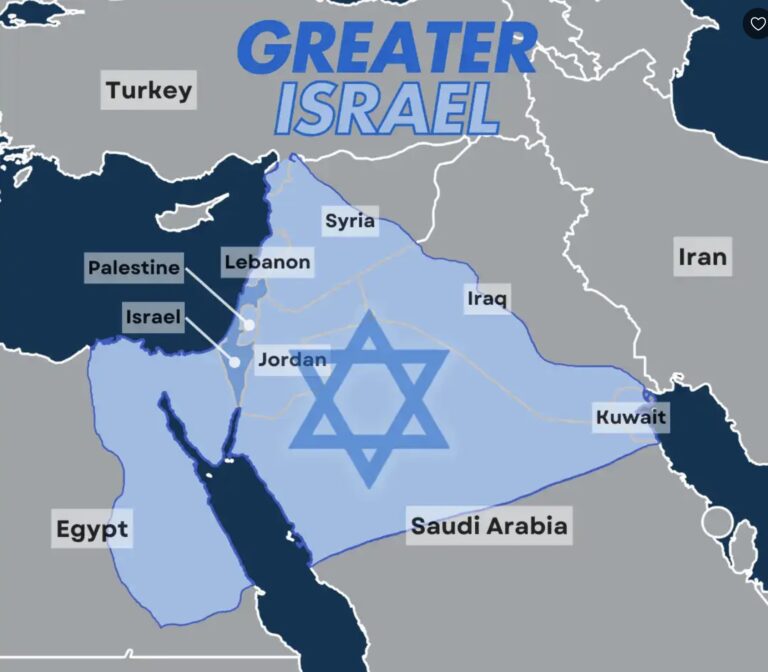
Nevertheless, nowhere is the revenge of geography more evident than in the case of the Israeli ultra right wing push for territorial expansion, and the creation of Greater Israel. The occupation of- and genocide in Gaza, the occupation of Lebanon, as well as Syrian territory, all stem from the Greater Israel paradigm.
On the 27th of October, 2026, Israel is scheduled to hold elections. These will not be ‘ordinary’ elections, it comes at a time when Israel is at war on multiple fronts, and its Prime Minister, Benjamin Netanyahu, faces an ICC arrest warrant, and long-standing accusations of corruption.
He is the first serving PM to have been put on notice of a planned prosecution. Some analysts argue that the PM has been using the conflicts in Gaza, Lebanon, and more recently with Iran, as a proverbial firewall national security excuse to postpone, delay, and kick the prosecutorial bucket as far as possible down the road.
The forthcoming Knesset election is also part of the reason why Netanyahu is pushing forward with ongoing attacks on, and occupation of southern Lebanon – he needs to show that his government can subdue Hezbollah, and implicitly the Shia threat. They desperately need a ‘win’ to sell ongoing warmongering in the region to the Israeli electorate.
However, while Tel Aviv continues with its occupation and bombardment of Lebanon, it is exactly the latter dynamic that is causing Hezbollah to reject any agreements reached between the Lebanese government- and Israel (brokered by the USA). Another reason why Hezbollah rejects aforementioned agreement is due to the fact that the USA refuses to provide assurances regarding the withdrawal of the IDF from southern Lebanon. US silence on the matter of the IDF entrenching itself in Lebanese territory constitute tacit approval of the aims of geographic expansion of the Israeli state.
Hyper nationalism and militarism define Israeli leadership actions, and thinking. Right wing political figures exert extraordinary influence, and pressure on Netanyahu. The latter forces are also aiming to implement and bring to reality the Greater Israel project, with the vision of positioning the country as financial, information, and dominant political-economic power in the region.
But, in addition to the above, Israel has shown in Gaza, Lebanon, Syria, and its bombing of Iran that it has absolutely no regard for international law, and neither is it concerned about the civilian consequences of its belligerence. One example of this can be found in what is called the Dahiya doctrine.
The Institute for Middle East Understanding describe the Dahiya doctrine as follows:
“What is the Dahiya Doctrine?
- The Dahiya Doctrine is an Israeli military doctrine that calls for the use of massive, disproportionate force and the deliberate targeting of civilians and civilian infrastructure.
What are the origins of the Dahiya Doctrine?
- The doctrine is named after the Dahiya suburb of Beirut, where the Lebanese paramilitary group Hezbollah has its headquarters, which the Israeli military levelled during its assault on Lebanon in the summer of 2006 that killed nearly 1,000 civilians, about a third of them children, and caused enormous damage to the country’s civilian infrastructure, including power plants, sewage treatment plants, bridges, and port facilities.
- It was formulated by then-General Gadi Eisenkot when he was Chief of Northern Command. As he explained (this link opens in a new window)
in 2008 referring to a future war on Lebanon: “What happened in the Dahiya quarter of Beirut in 2006 will happen in every village from which Israel is fired on… We will apply disproportionate force on it (village) and cause great damage and destruction there. From our standpoint, these are not civilian villages, they are military bases… This is not a recommendation. This is a plan. And it has been approved.” Eisenkot went on to become chief of the general staff of the Israeli military before retiring in 2019. - While it became official Israeli military doctrine after Israel’s 2006 attack on Lebanon, Israel’s military has used disproportionate force and targeted Palestinian, Lebanese, and other civilians since Israel was established in 1948 based on the ethnic cleansing of indigenous Palestinians, including dozens of massacres to force them to flee for their lives.”
As the world has already witnessed in Gaza, the Israeli Dahiya doctrine is applied throughout the region – according to which the path to victory lies through the ruthless punishment of civilian populations.
The absolute dehumanisation of Palestinians, Arabs, and Iranians is evident, with ultra right figures in Israeli politics claiming there are no innocent Palestinians, whether they are adults or children. They call on the IDF to continue to ‘sweep’ ancestral territories of Greater Israel, without concern for international law.
Israeli policy towards Palestinians, especially in the West Bank, creates a similar situation as in South Africa under Apartheid rule. Territorial fragmentation, and permits required for movement between territories does not only restrict free movement of people, but actively discriminates against Palestinians.
Settlement off the conflict is possible only through the implementation of relevant UN Security Council resolutions, and the establishment of a Palestinian state. Trump’s peacekeeping plan supported by Israel covers only Gaza, and does not define the status of the West Bank, the latter implicitly undermines efforts of the international community towards Palestinian statehood.
The use of disproportionate force, combined with the political drive towards establishing Greater Israel, is clearly a case of the revenge of geography, and stages the comeback of territorial conquest. The question at this stage is whether the ultra-right Israeli forces will prevail in the forthcoming Knesset election. If they do, West Asia can most likely expect a further deterioration of an already dire regional security situation.
Institute for Middle East Understanding. 2024. Explainer: the Dahiya doctrine & Israel’s use of disproportionate force. 31 July, 2024. https://imeu.org/resources/resources/explainer-the-dahiya-doctrine-israels-use-of-disproportionate-force/175